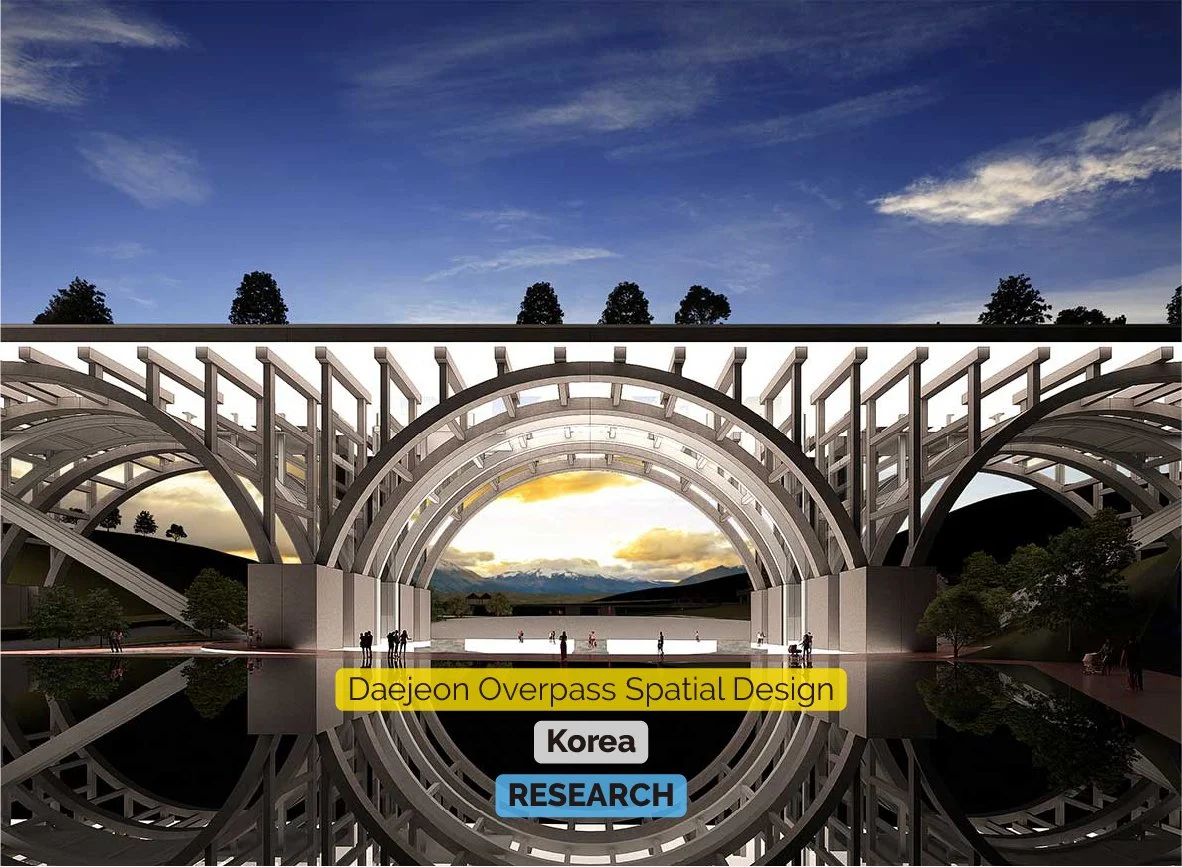
Daejeon Overpass Spatial Design
대전육교 일원 관광자원화 공간디자인
Year: 2024
Use: Multi-Use
Location: Daejeon, Korea
Gross Floor Area: 2,143m2
Height: 2 stories (4m) - Overpass Deck Standard
Client: Daejeon Metropolitan City (대전광역시)
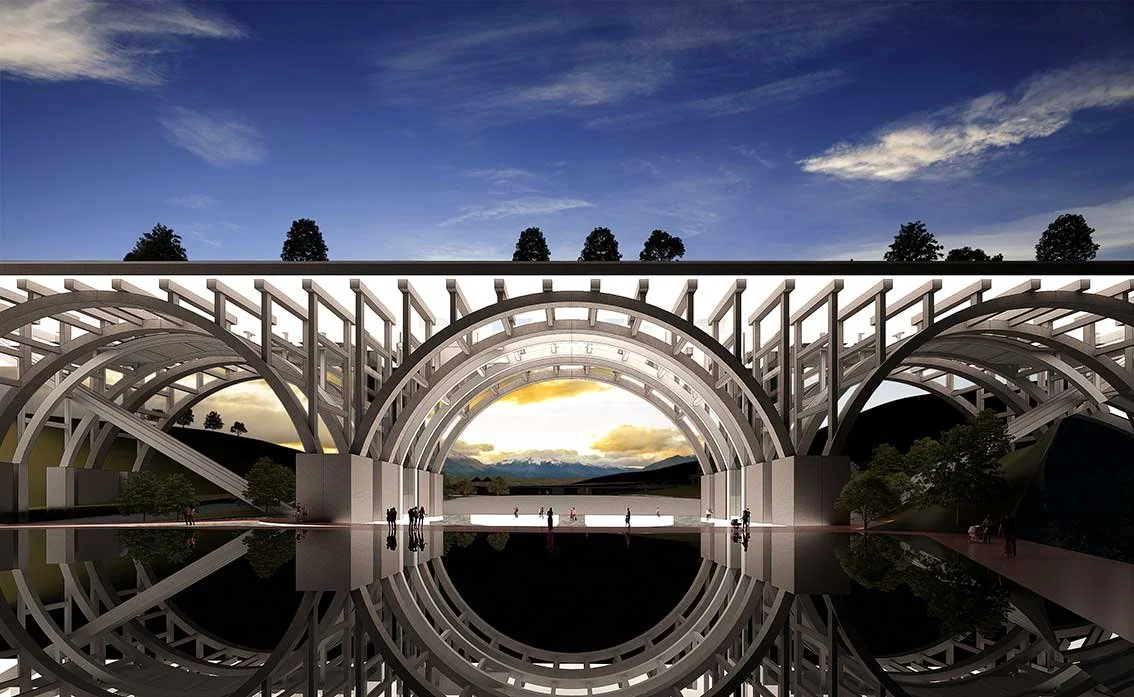
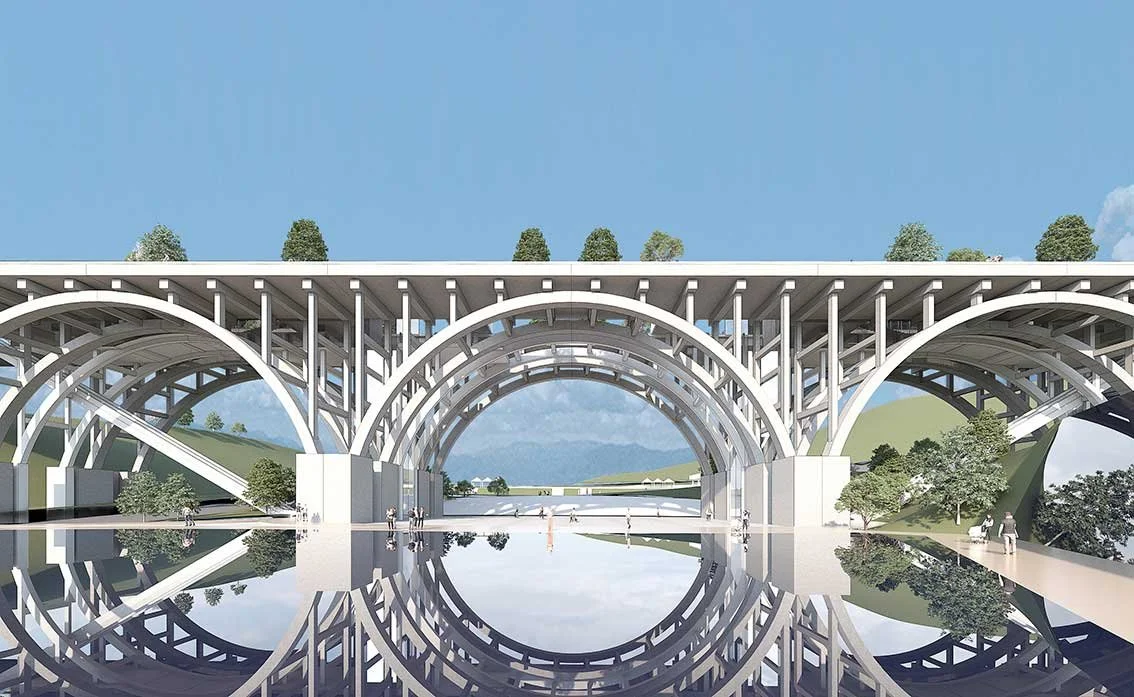
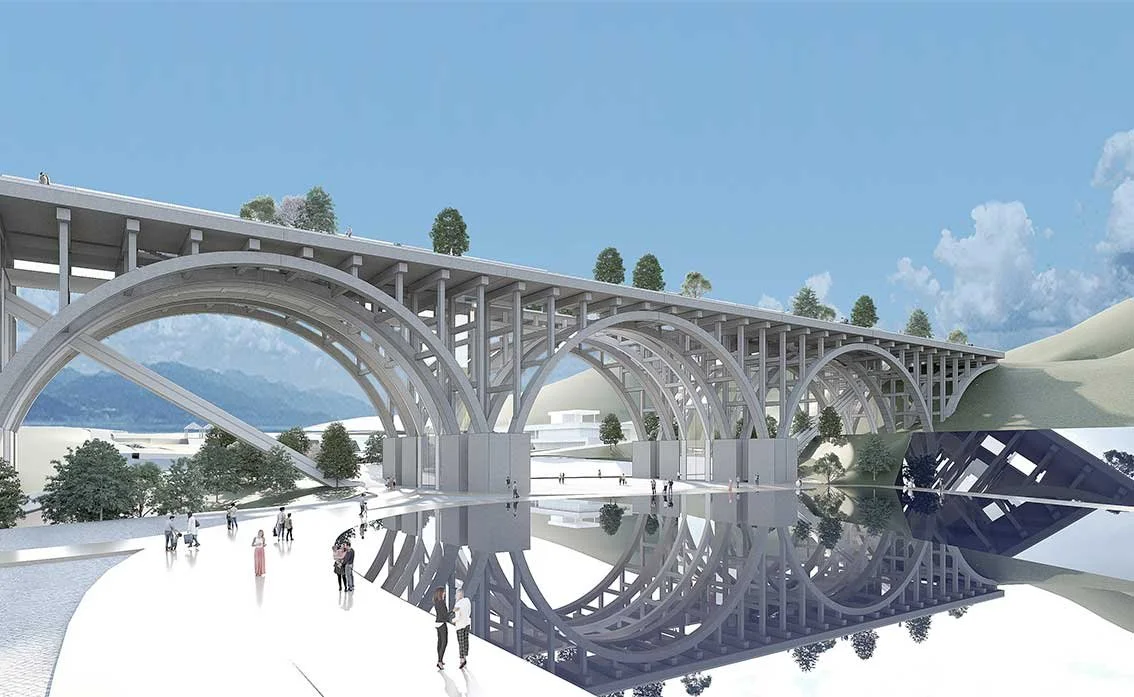
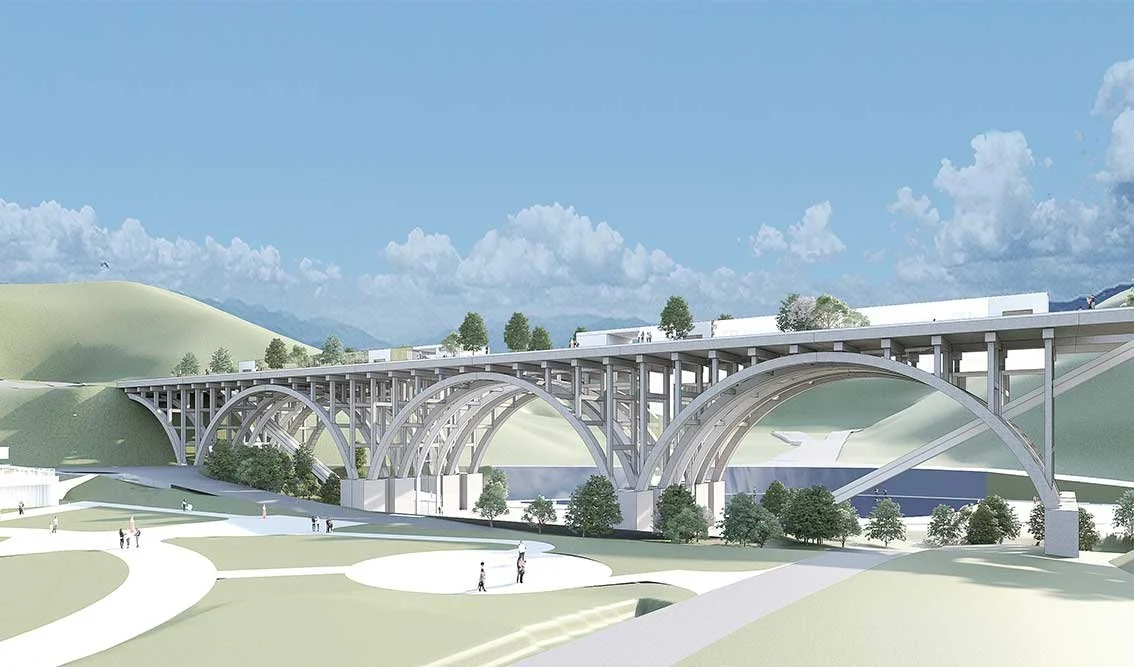
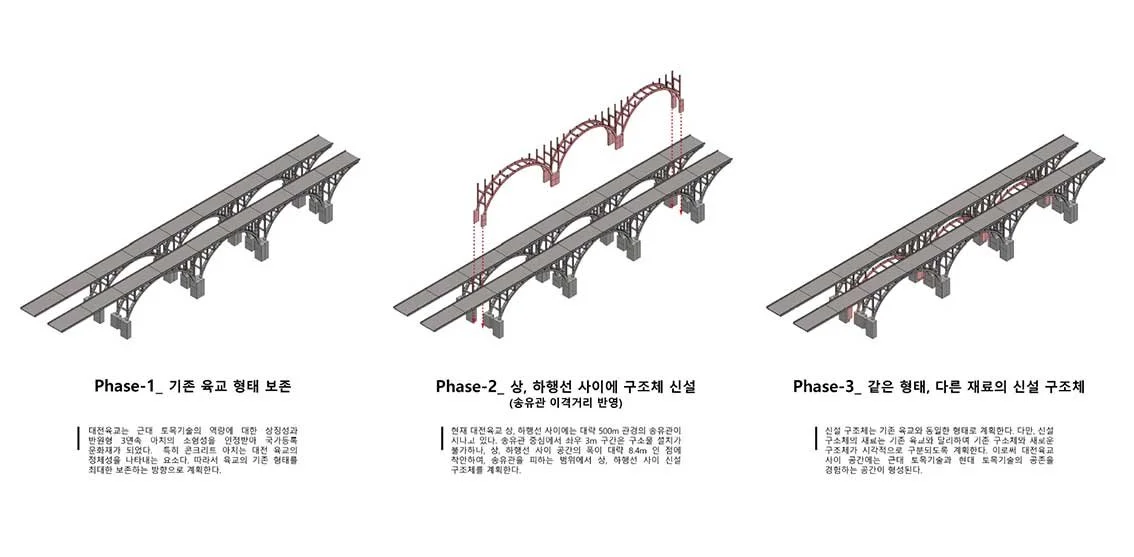
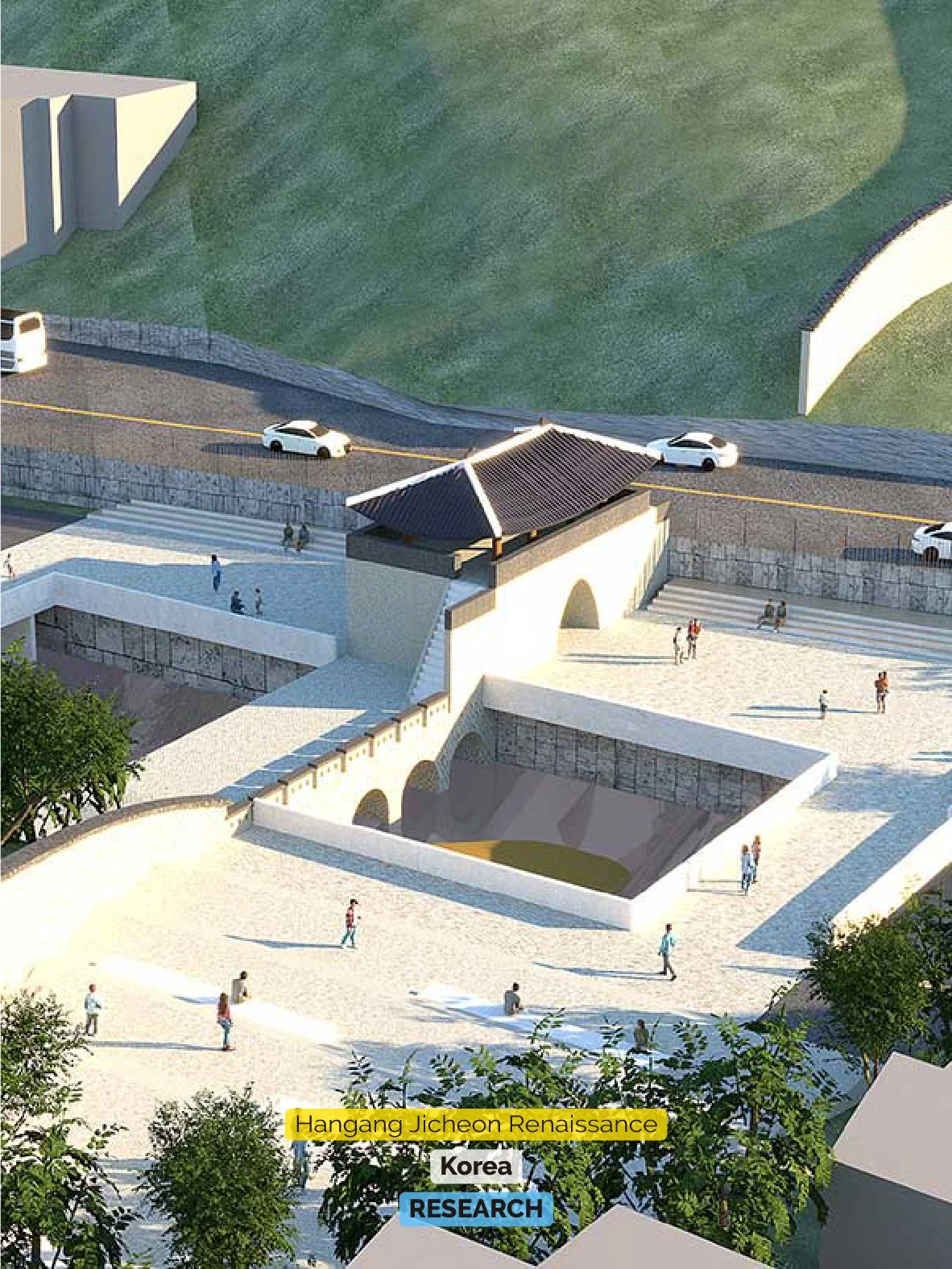
Daejeon Overpass is Korea’s first reinforced concrete arch bridge, a structure that embodies the technological ambitions of modern civil engineering and possesses a strong formal identity defined by its three consecutive semi-circular arches. Recognised for both its historical significance and sculptural quality, the bridge was designated as a National Registered Cultural Heritage in 2020. This project approaches Daejeon Overpass not merely as an object of preservation, but as a structural landscape—a spatial medium through which the past and the present are brought into dialogue.
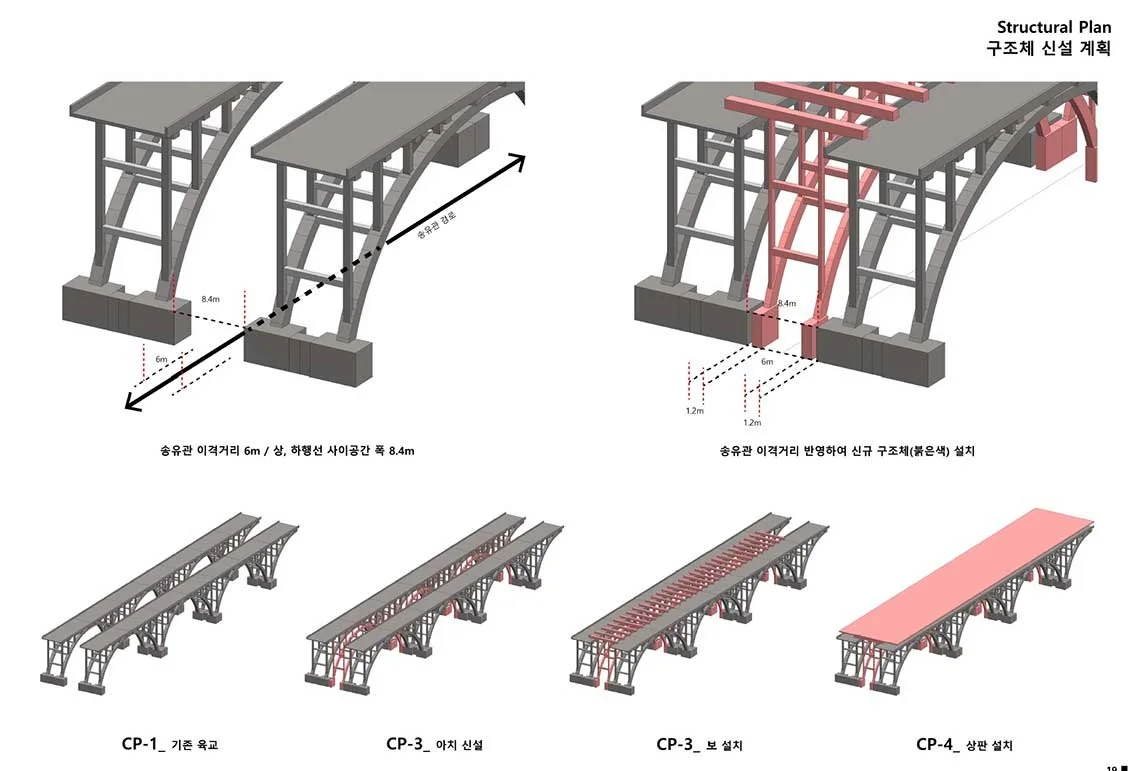
Respecting the materiality, proportions, and rhythmic repetition of the original arch structure, the design integrates contemporary structural reinforcement with landscape, lighting, and environmental strategies to extend the bridge’s architectural presence at an urban scale. The arches are reinterpreted not only as load-bearing elements, but as generators of spatial experience, enabling the bridge’s formal clarity to be perceived, inhabited, and re-read within the contemporary city.
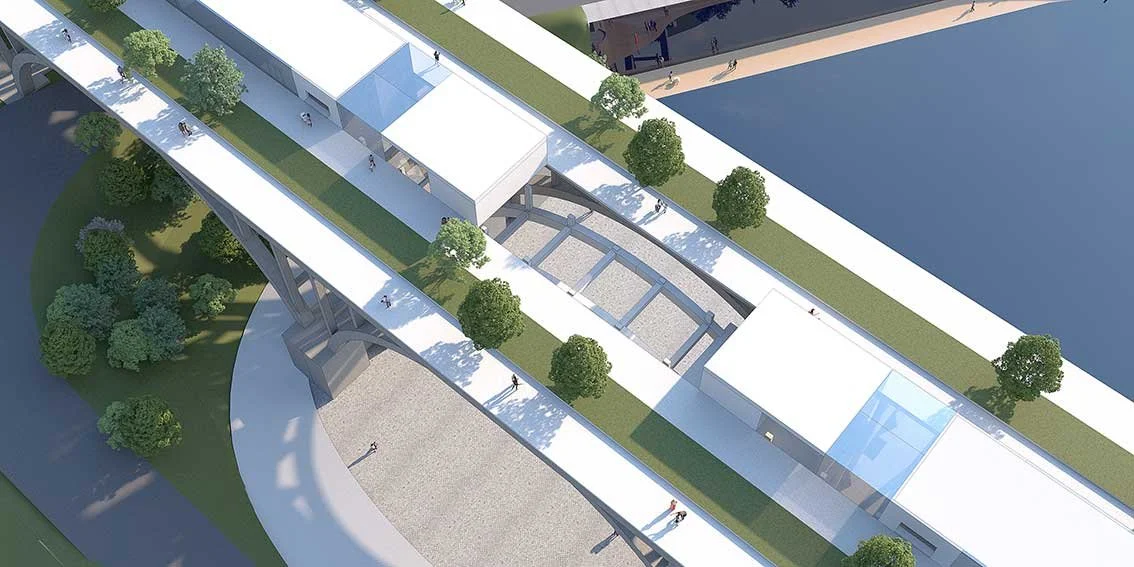
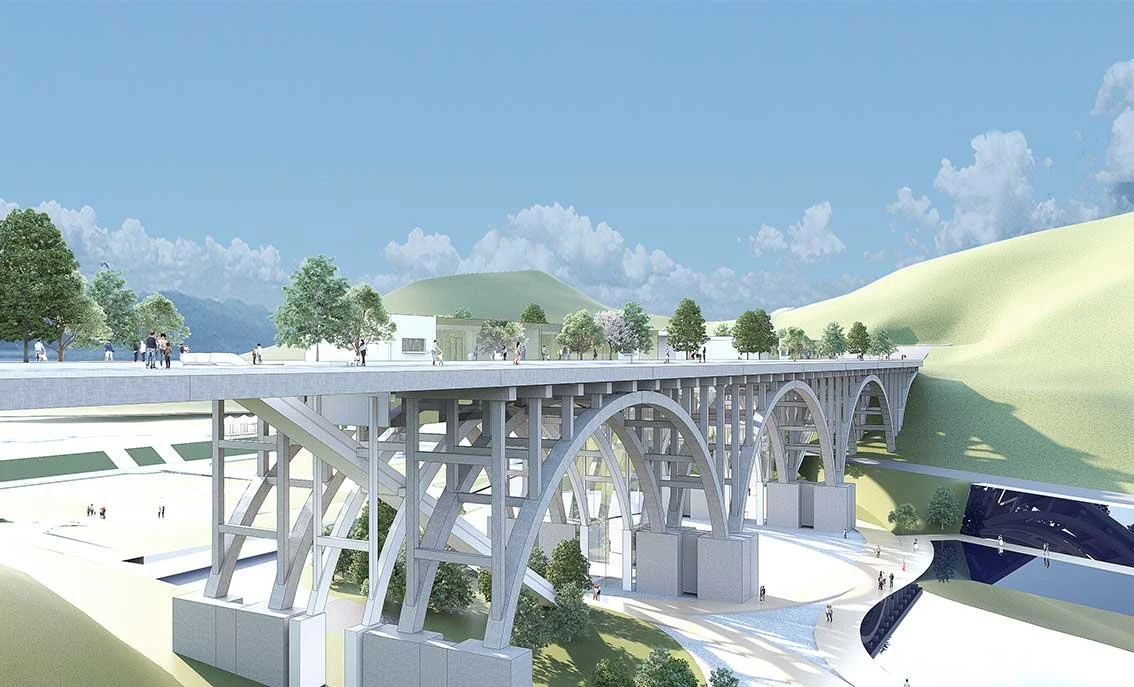
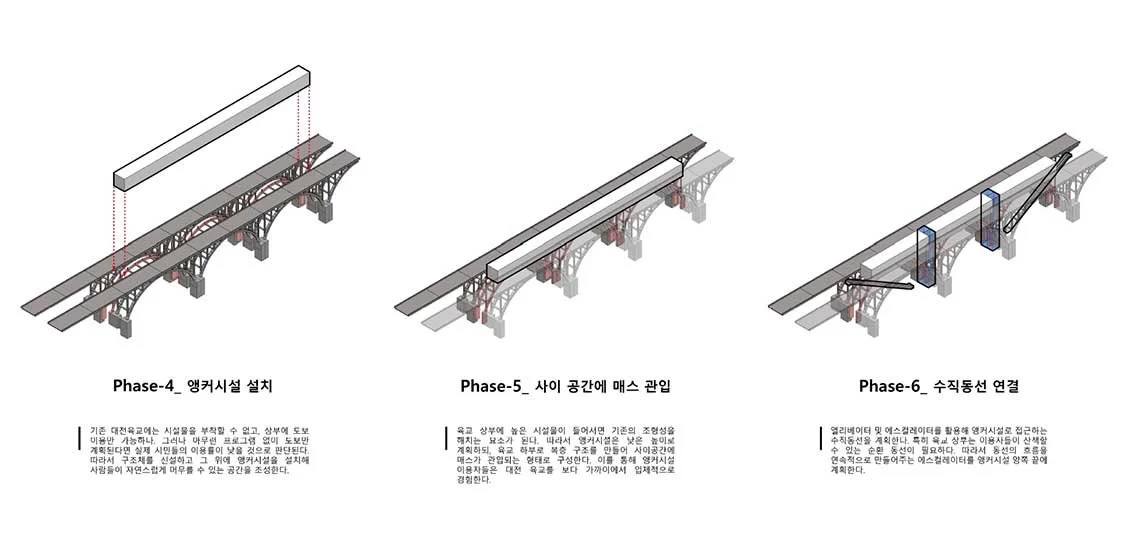
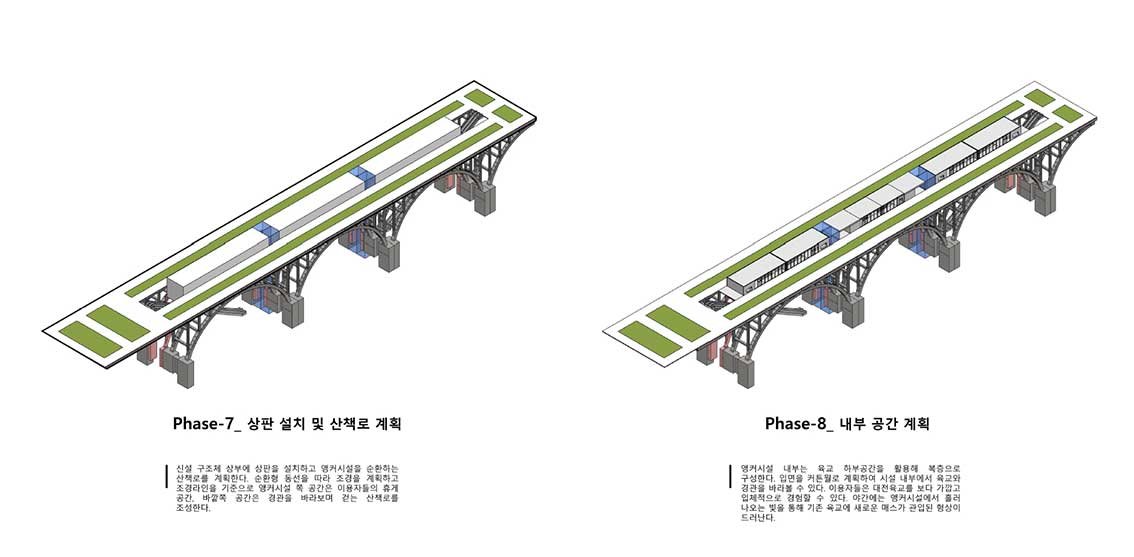
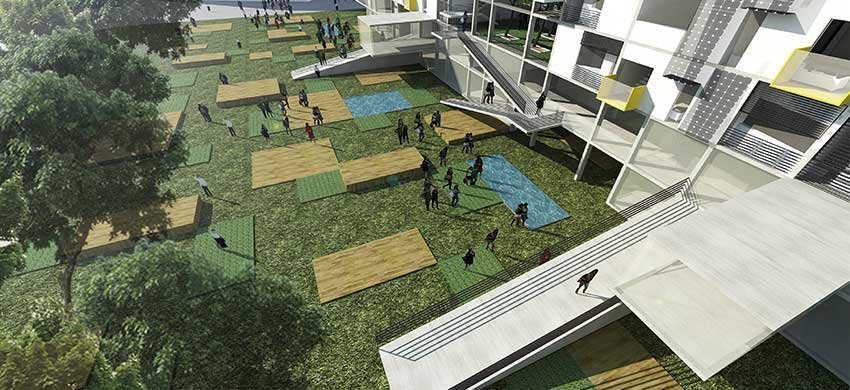
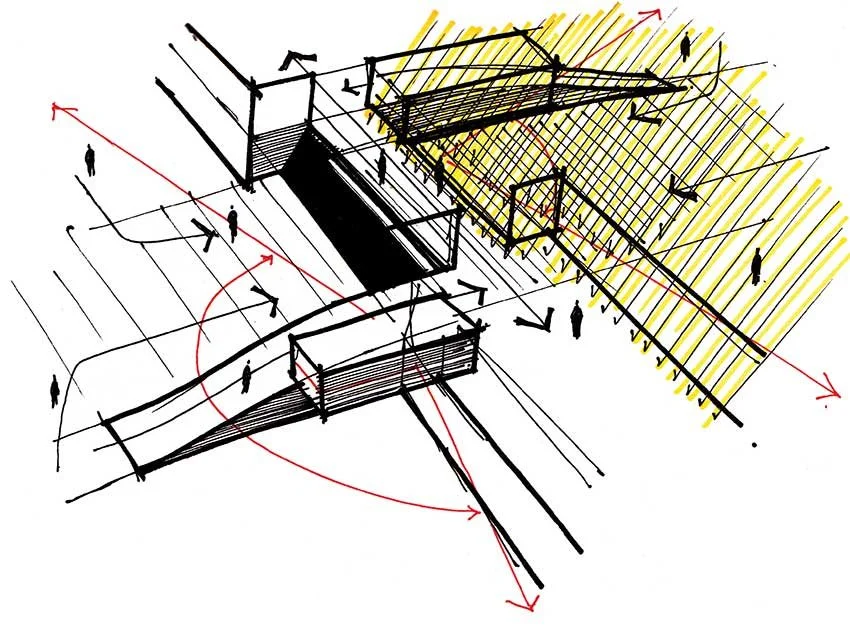
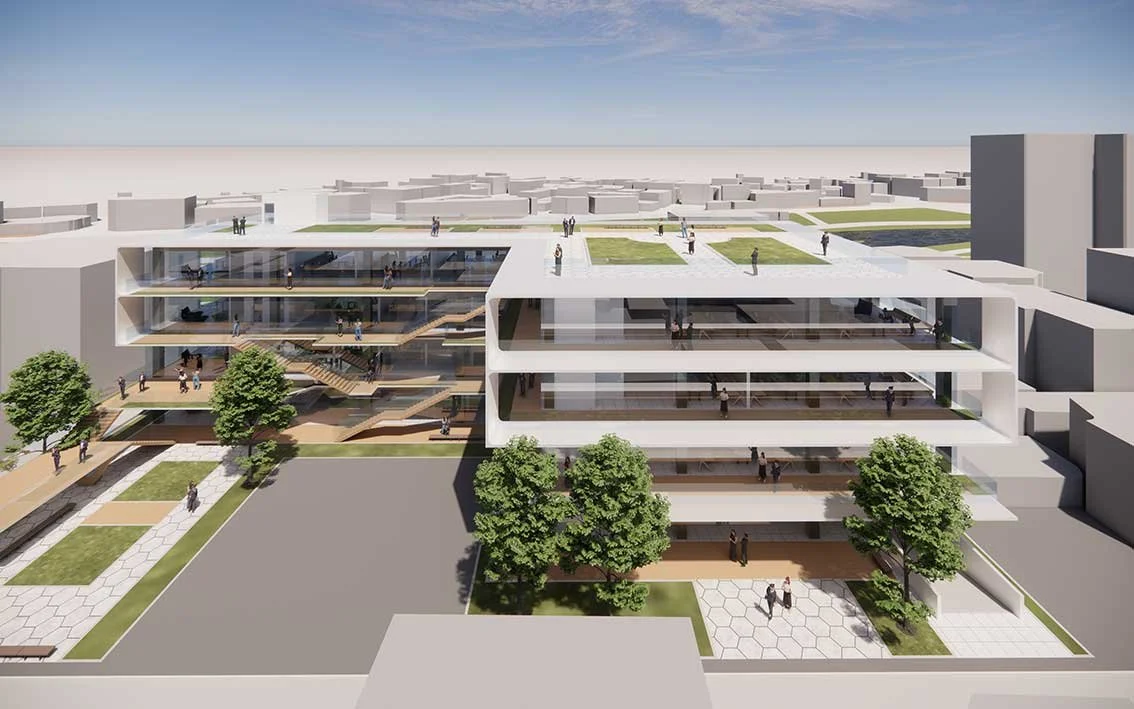
The upper deck is conceived not as a simple linear park or circulation route, but as an elevated public platform where movement, pause, outlook, and cultural activity overlap. Through the introduction of programme and spaces for dwell time, the bridge is transformed from a transitional infrastructure into a place of encounter and civic experience. Beneath the bridge, the undercroft—where the depth, repetition, and tension of the arches are most vividly expressed—is reconfigured from a functionally residual space into a cultural landscape that foregrounds the bridge’s structural beauty and historical narrative. The upper and lower realms operate in visual and spatial continuity, forming a unified and layered experience of the structure.
The spatial axis of Gilchi Cultural Park, centred on its outdoor performance space, is extended and reinforced towards the arches of Daejeon Overpass, establishing a continuous cultural landscape that links park, bridge, and surrounding urban fabric. This axis functions not only as a connective gesture, but as a strategic framework that amplifies the symbolic presence and spatial legibility of the bridge within the city. Ultimately, the project redefines Daejeon Overpass as a living piece of urban heritage—an infrastructure where history, technology, and contemporary public life converge.
대전육교는 국내 최초의 철근콘크리트 아치형 교량으로서, 근대 토목기술의 진보와 그 시대의 기술적 사고를 집약적으로 보여주는 구조물이며, 반원형 3연속 아치가 만들어내는 명확한 구조적 리듬과 조형적 완성도를 지닌 국가등록문화재이다. 본 계획은 대전육교를 단순히 보존의 대상이나 과거의 인프라로 다루기보다, 근대와 현대를 잇는 ‘구조적 경관(structural landscape)’으로 재해석하는 데에서 출발한다. 근대 토목기술이 구현한 아치 구조의 물성, 비례, 반복성을 존중하면서, 현대의 구조 보강 기술과 경관·조명·환경 디자인을 결합하여 교량이 지닌 조형성을 도시적 스케일로 확장하고자 한다.
육교 상부는 단순한 이동 동선이나 선형 공원에 머무르지 않고, 보행·체류·조망·문화적 프로그램이 중첩되는 입체적인 공공 플랫폼으로 계획된다. 이를 통해 교량 위에서의 경험이 일상적인 통과 행위를 넘어, 도시와 구조물을 인식하고 체험하는 장소적 경험으로 전환되도록 한다. 한편, 육교 하부 공간은 반복되는 아치가 만들어내는 깊이감과 구조적 긴장감을 가장 직접적으로 체감할 수 있는 장소로서, 현재의 기능 중심적 사용 방식을 재구성하여 교량의 구조미와 역사성을 드러내는 문화적 장면으로 전환한다. 상·하부 공간은 시각적·공간적 연속성을 통해 상호 보완적으로 작동하며, 하나의 통합된 구조적 경험을 형성한다.
또한 야외 공연장을 중심으로 형성된 길치 문화공원의 공간적 축은 대전육교의 아치로 자연스럽게 연장되어, 공원과 교량, 그리고 주변 도시 맥락을 하나의 연속된 문화 경관으로 통합한다. 이 축은 단순한 연결을 넘어, 도시 속에서 대전육교의 상징성과 장소성을 강화하는 핵심 장치로 작동하며, 교량을 중심으로 한 새로운 공공 공간 네트워크를 형성한다. 궁극적으로 본 디자인은 대전육교를 과거의 토목 유산에 머무르게 하지 않고, 역사와 기술, 공간 경험이 중첩된 현재 진행형의 도시 문화 인프라로 재정의하는 것을 목표로 한다.